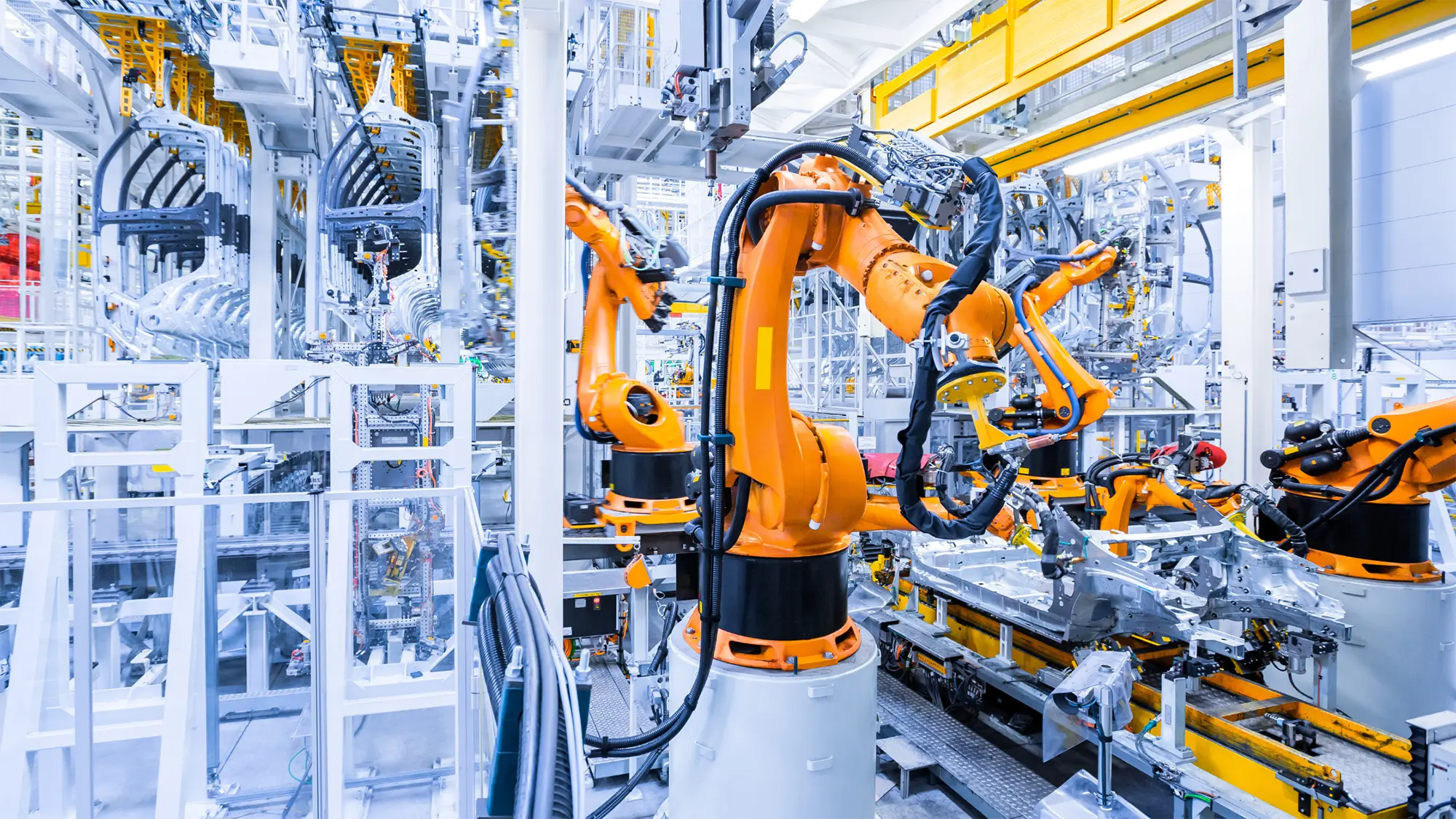
Exciting Technological Advancements Poised to Transform Defense in 2024

Exciting advancements are shaping the defense industry’s future in 2024. As geopolitical tensions rise and weapons stock depletion becomes a pressing concern, nations are ramping up their defense investments, according to Sarwant Singh, a contributor for Forbes. Global defense spending reached $1.7 trillion in 2022, driven by key players worldwide. The increased investments in response to regional conflicts highlight this trend, translating to significant growth for the defense industry. This growth is reflected in the rising share prices of major defense companies, showcasing investor confidence. Beyond established players, defense startups are achieving high valuations, disrupting the industry with innovative technologies, Singh writes.

He cites the following key developments in 2024:

  • Next-gen Counter-Drone Systems: Autonomous capabilities in counter-drone systems are enhancing military efficiency and soldier safety.
  • Electrification of Military Vehicles: The shift to electric military vehicles is gaining momentum, with the market projected to reach $20.4 billion by 2030.
  • AI Investments: Significant investments in AI by the US and China are driving innovations in unmanned combat aircraft and manned-unmanned teaming.
  • Soldier-Assisting Quadruped Robots: Robots are being deployed to carry supplies and provide medical assistance, opening new market opportunities.
  • Space Capabilities and Missile Defense: Investments in space capabilities and hypersonic missile systems are preparing for future security challenges.

To explore these developments and their implications for the defense industry, read the full article.


Revolutionizing Defense Logistics with Cutting-Edge Technology

In the digital age, technological innovation is transforming defense logistics, enhancing accuracy, intelligence, and resource management while significantly reducing costs. According to an article published by the Institute for Defense and Business, the defense industry is leveraging advanced technologies to improve decision-making, testing, supply chain efficiency, life cycle logistics, and cybersecurity.

Detailed Data Analysis

According to the article, modern technologies provide quick access to specified data, facilitating faster decision-making and strategic planning. This capability enables defense professionals to interpret intelligence more swiftly and stay updated on logistics applications, transforming how data is processed and utilized.

Situational Models for Testing

Technologies such as digital twins and artificial intelligence allow defense organizations to model specific situations for testing logistics operations without risking actual systems. This approach saves time and resources, expands testing capabilities, and enhances military preparedness and aerospace engineering.

Supply Chain Efficiency

For optimal defense supply chain operations, processes must be redeveloped around advanced strategies and technologies, the article states.  Digitization at various stages enhances efficiency, integrates information, and enables conditional application and monitoring, ensuring a responsive and innovative supply chain.

Life Cycle Logistics

Technological advancements are crucial for innovating life cycle logistics. By incorporating new technologies, the defense industry can sustain and adjust system life cycles more effectively, promoting industrial readiness and maintaining operational efficiency in military depots.

Cost Reduction

Despite budget constraints, defense organizations can reduce costs by increasing supply chain efficiency, introducing artificial intelligence, and accurately analyzing data. Efficient technology usage minimizes risks and errors, resulting in faster and more precise outcomes.

Cyber Security

Implementing robust cybersecurity measures is essential to protect valuable research, intelligence, and defense logistics from potential threats. Advanced technologies not only safeguard information but also test and strengthen existing security measures, ensuring a stable and secure defense infrastructure.


Redefining Education: The Impact and Opportunities of Emerging Technologies in the Classroom

Advances in educational technology, notably the emergence of AI tools like ChatGPT and the expanding use of virtual reality (VR), are significantly transforming the learning landscape, according to a recent article in the Stanford Report, published by Stanford University.

Dan Schwartz, Dean of Stanford Graduate School of Education, discusses the dual-edged nature of these advancements. He emphasizes that while technologies like AI and virtual reality (VR) democratize access to quality educational experiences, they also pose risks if not implemented thoughtfully. The article points out that technologies can perpetuate ineffective teaching methods unless they are utilized to innovate and improve educational practices.

As funding from the Elementary and Secondary School Emergency Relief program winds down, educational institutions face challenges in leveraging technology effectively amidst shrinking resources. The article elaborates on the significant role AI is playing in the classroom, where tools such as ChatGPT have sparked discussions on academic integrity and the potential for enhancing teaching processes. According to Victor Lee, an associate professor at Stanford, AI can streamline administrative tasks like grading, allowing teachers to devote more time to student interaction.

The piece also highlights the expanding use of immersive technologies in education. It discusses how VR and similar technologies are not only being used to provide interactive learning experiences but also enabling students to become creators of content that reflects their own environments. This aspect of technology encourages a deeper engagement with the material, transforming students from passive recipients of information to active participants in their learning journey.

Furthermore, the article touches on the gamification of education, which incorporates elements of game design to make learning more engaging. However, it cautions that the motivational benefits of gamification need to be aligned with educational outcomes to ensure that they contribute to genuine learning.

Finally, the article discusses the challenges and opportunities presented by the vast amounts of data generated by educational technology. While this data can offer valuable insights into student performance and learning needs, there are concerns about privacy and the effective use of this information. The article suggests that developing systems to make educational data accessible and actionable for teachers is crucial for harnessing the full potential of educational technology.

Overall, the article from Stanford’s education scholars serves as a comprehensive overview of how emerging technologies are shaping the future of education, highlighting both the opportunities for innovation and the need for careful implementation to truly enhance learning outcomes.

Click the link below to read the full article.


Embracing the Future: How Manufacturers Can Thrive in the Industry 5.0 Era

Today, we stand at the precipice of a new industrial revolution, Industry 5.0, where the synergy between humans and machines is key to resilience and sustainability. While Industry 4.0 laid the foundation with concepts like machine connectivity and efficiency monitoring, its limitations became apparent in situations demanding rapid adaptability and creative engineering. A recent article in Manufacturing.net says Industry 5.0 builds on these foundations, adding a human-centric approach to address these challenges. Successful adaptation to Industry 5.0 requires manufacturers to focus on technology investments, long-term people strategies, and upskilling. 

The Urgency of Upskilling 

Successful transition to Industry 5.0 necessitates an effective upskilling program. This involves: 

  • Preparing the workforce for immediate performance needs and long-term objectives. 
  • Achieving synergy between people and technology, viewing technology as an ally, not a hindrance. 
  • Upskilling is vital for competitiveness and attracting talent. Modern workers expect advanced technology in their professional lives. AI and automation are crucial in filling knowledge gaps and enhancing workforce capabilities, making manufacturing jobs appealing to the next generation. 


Navigating the Future of Manufacturing – Top Trends in 2025

The manufacturing sector is undergoing a remarkable transformation, and 2025 is poised to be a pivotal year in this evolution. To remain competitive, understanding and adopting the latest trends is key. Online publication Manufacturing Today shares the top trends shaping the future of manufacturing: 

 Digital Twins Take Center Stage: This year, we’ll see a surge in the use of digital twins – virtual replicas of physical systems – allowing manufacturers to monitor and optimize operations in real-time. According to Manufacturing Today, these tools will be crucial for scenario planning and troubleshooting, enhancing efficiency while reducing downtime. 

The Resurgence of Reshoring: Strengthening supply chain resilience is at the forefront. Manufacturers are bringing production closer to home, aiming to reduce foreign dependencies. This shift not only fortifies supply chains but also nurtures local innovation and sustainable practices, the article says.  

Empowering the Workforce through Reskilling: As technology advances, so does the need for a skilled workforce. Training programs will increasingly focus on digital, automation, and data analysis skills, marrying traditional manufacturing knowledge with digital expertise. This approach will create a workforce adept in handling advanced manufacturing technologies. 

The Rise of Industrial Automation: Automation, including robotics and AI, will continue to revolutionize manufacturing, enhancing productivity and decision-making. The article says this leads to more autonomous and intelligent manufacturing systems. 

The Expansion of Additive Manufacturing: 3D printing becomes increasingly vital in manufacturing, enabling rapid prototyping, customization, and waste reduction. Manufacturing Today says its application will broaden to include a variety of materials, paving the way for more sustainable manufacturing and complex designs. 

AI as a Cornerstone of Efficiency: AI-driven analytics will be pivotal in optimizing production lines, predictive maintenance, and quality control. Its application will extend to supply chain optimization and human-robot collaboration, making production lines more adaptive. 

In summary, 2025 is set to be a year of digital transformation, sustainability focus, and workforce adaptation in the manufacturing industry. These trends will redefine manufacturing methods and set the stage for the future.  

Bell Techlogix Provides Software Licensing Expertise to Lancaster-Lebanon Intermediate Unit 13

In today’s evolving tech-driven world, teachers and students rely greatly on the latest devices and gadgets for learning and instruction. With this digital transformation comes the intricate web of software licensing – a topic that often raises more questions than answers for K-12 schools.

As an IT solutions provider, Bell Techlogix understands the pivotal role that software plays in delivering quality education, and also the challenges that schools face in navigating the licensing terrain. Our partnership with Lancaster-Lebanon Intermediate Unit 13 in Pennsylvania demonstrates how we work directly with Microsoft and the IU13 to support the Microsoft EES Agreement for approximately 550 schools throughout the Commonwealth.

About IU13

IU13 offers a variety of statewide software licensing agreements that the K-12 public and private schools within the Commonwealth of Pennsylvania are able to leverage.  It is a leader in recognizing the needs of schools and implementing programs to meet those needs, with a core compelling purpose of improving student learning.

Challenge

IU13 required a trusted, valued partner who is responsive and knowledgeable about Microsoft agreements and software licensing.

Solution 

During this 10-year partnership with IU13, Bell Techlogix has proven itself as a valued partner. Today, we have approximately 550 schools throughout the Commonwealth that participate in this agreement. It includes over a million students and 150,000 employees.  In addition, we have helped many of the schools make the transition to the cloud using Azure.


Proper planning is key for higher ed device management programs

A successful device management program at colleges and universities greatly depends on proper planning and implementation, especially in these challenging financial times, an analyst suggests in a recent article in EdTech Magazine. Zeus Kerravala is the founder of and principal analyst at ZK Research. In a recent column in EdTech, Kerravala offered best practices colleges and universities can follow to plan adequately for device management, which is a critical piece to a technology strategy.

Among Kerravala’s recommendations:

Assess current and future device needs – Keep an inventory of current assets in addition to tracking condition and quality to ensure efficiency and reliability. “Such a proactive approach helps avoid unexpected expenses and ensures that students and staff are always equipped with functional devices,” Kerravala writes.

Purchase devices in bulk – Purchasing in bulk increases the opportunity to negotiate a better price with vendors, Kerravala says. By standardizing devices, there are fewer compatibility issues and streamlined tech support. “Over time, the savings accrued from reduced maintenance, fewer replacements and improved productivity can outweigh the initial savings of buying cheaper but less reliable devices,” Kerravala writes.

Read Kerravala’s full article below.

The role of IT in nurturing a collaborative learning environment in higher education

AI is advancing rapidly in colleges and universities, making it critical for leaders in higher education to adapt and prepare students and staff for this emerging technology, two technology professors wrote in a recent essay.

Charles Hodges and Ceren Ocak, professors at Georgia Southern University, wrote an essay for EDUCAUSE about the importance of integrating AI on college campuses. The authors note some higher education institutions have adopted AI tools such as Chat GPT while others view it as a type of cheating. As colleges and universities scramble to find ways to set policy on their campuses for how AI tools are used, Hodges and Ocak recommend utilizing existing resources before creating rules.

Among the recommendations are: Conducting a “technoethical audit of the technologies under consideration” using guiding questions such as how the technology impacts learning or how is the environment affected by the technology.

“The considerations highlighted in this article are intended to help higher education leaders develop academic policies and practices that enhance the quality of education, improve student outcomes, and foster innovation,” the authors write. “…Acknowledging AI and its uses in higher education is a crucial, pragmatic step toward equipping students with the skills they need to thrive once they leave our campuses.”

Read the full article below.


Budget restrictions, culture top reasons for digital transformation in schools

As important as technology is for schools, digital transformation remains “a work in progress” as k-12 schools battle budget restrictions, culture, and lack of strategy.  The results are revealed in the 2023 THE Journal Digital Transformation Survey. The survey features 237 responses from K-12 schools and districts in U.S. about digital transformation. Participants were technology leaders and school staff.

Almost half of those surveyed cited budget restrictions as the primary obstacle to digital transformation. Other challenges include institutional culture, lack of clarity on what digital transformation means and lack of buy-in. Based on responses alone, K-12 IT leaders and administrators (non-IT) had different opinions about obstacles delaying digital transformation in schools.  K-12 IT leaders cited  institutional culture and lack of buy-in. Administrators noted budget restricts and security concerns as top reasons.

Full results of the survey are:

  • Budget restrictions – 49.66 percent
  • Digital literacy among students, staff, faculty – 37.93 percent
  • Lack of clarity on what digital transformation means to the institution – 26.90 percent
  • Culture, lack of buy-in – 32.41 percent
  • Lack of institutional strategy – 22.76 percent

Digital Transformation Slow to Take Off in K-12 Schools, According to Survey

In today’s rapidly evolving technological landscape, digital transformation has become a necessity for organizations across industries. However, when it comes to school districts, the adoption of digital technologies and the implementation of comprehensive digital transformation strategies have been sluggish. According to a recent survey by THE Journal, 6.2 percent of educators polled said they are not considering digital transformation in their district at all. By embracing digital transformation, school districts can create a more connected, efficient, and inclusive learning environment that empowers students to reach their full potential. Slow implementation could limit much-needed enhancements to enrich the learning experience for students.

The 2023 THE Journal Digital Transformation Survey was conducted by THE Journal from March 2023 to June 2023 and included 237 responses from K-12 schools and districts around the country. When asked where they were in their current state of digital transformation the responses ranged from not considering it all and haven’t begun to starting implementation and still defining it within the organization.

There are several reasons for the slow pace of digital transformation in schools: Limited funding, resistance to change, privacy and security concerns, infrastructure challenges, and complex decision-making processes all contribute to the slow rollout of digital transformation initiatives in educational institutions.